
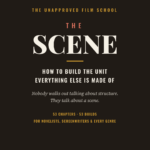
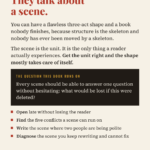
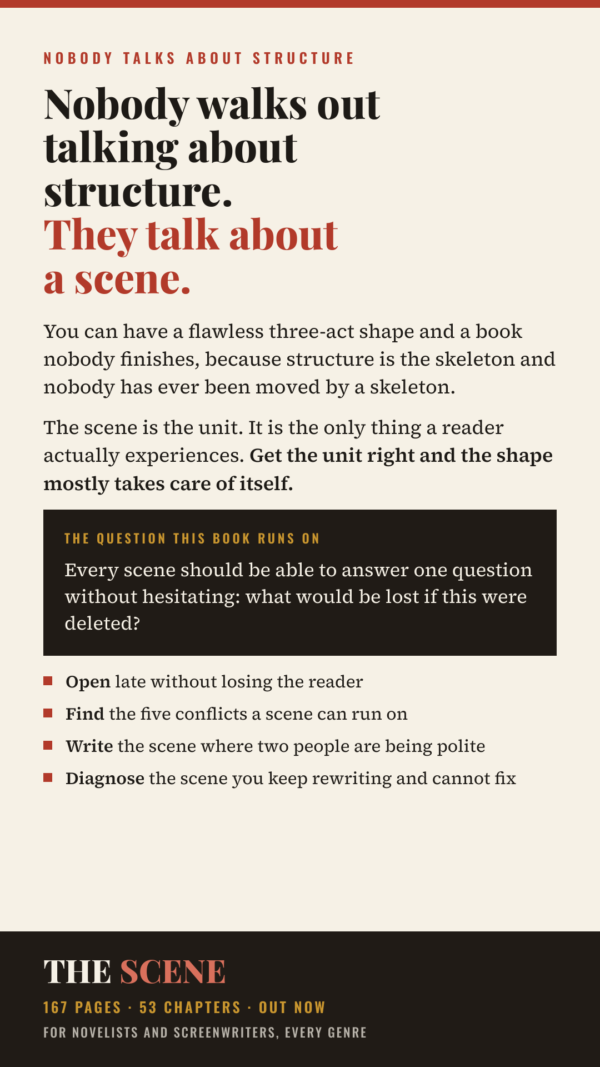
Nobody finishes a book or walks out of a cinema talking about structure. They talk about a scene.
The dinner in the basement. The phone call she doesn’t answer. The two of them in the car saying nothing. Whole reputations are built on four or five of these, and the rest of the work exists to hold them up.
And yet almost everything written about writing is about the whole: the acts, the arcs, the beats, the shape of the thing seen from above. The scene, the only unit any of us actually sits down and writes, gets a chapter.
This is the book about that unit.
It is written for everyone who builds one. Novelists, screenwriters, playwrights, short story writers, people three drafts into something that isn’t working and unable to find where. The scene is the one component all of us genuinely share.
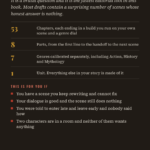
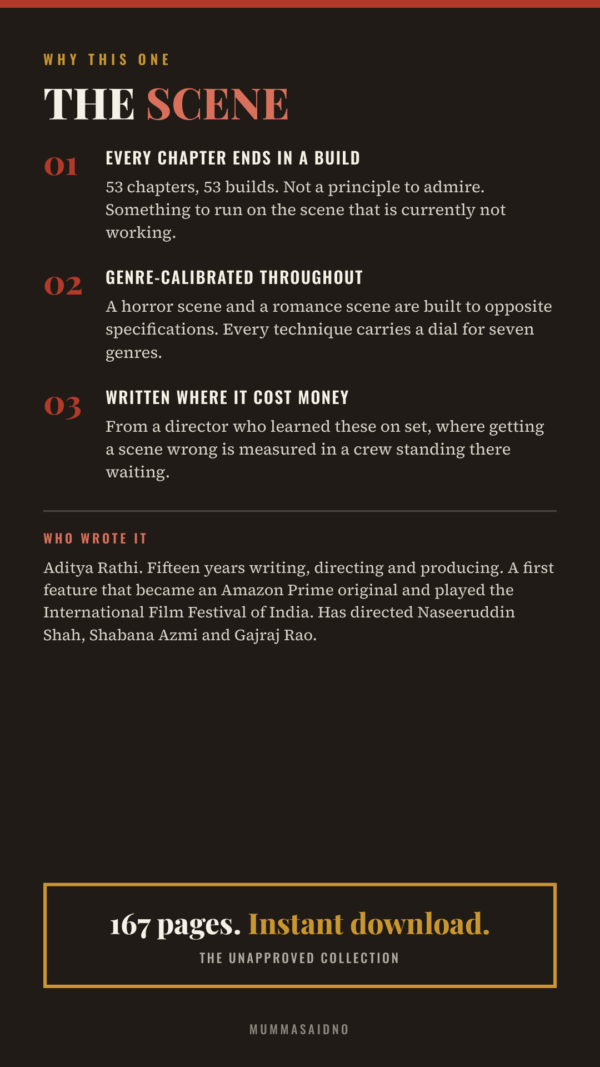
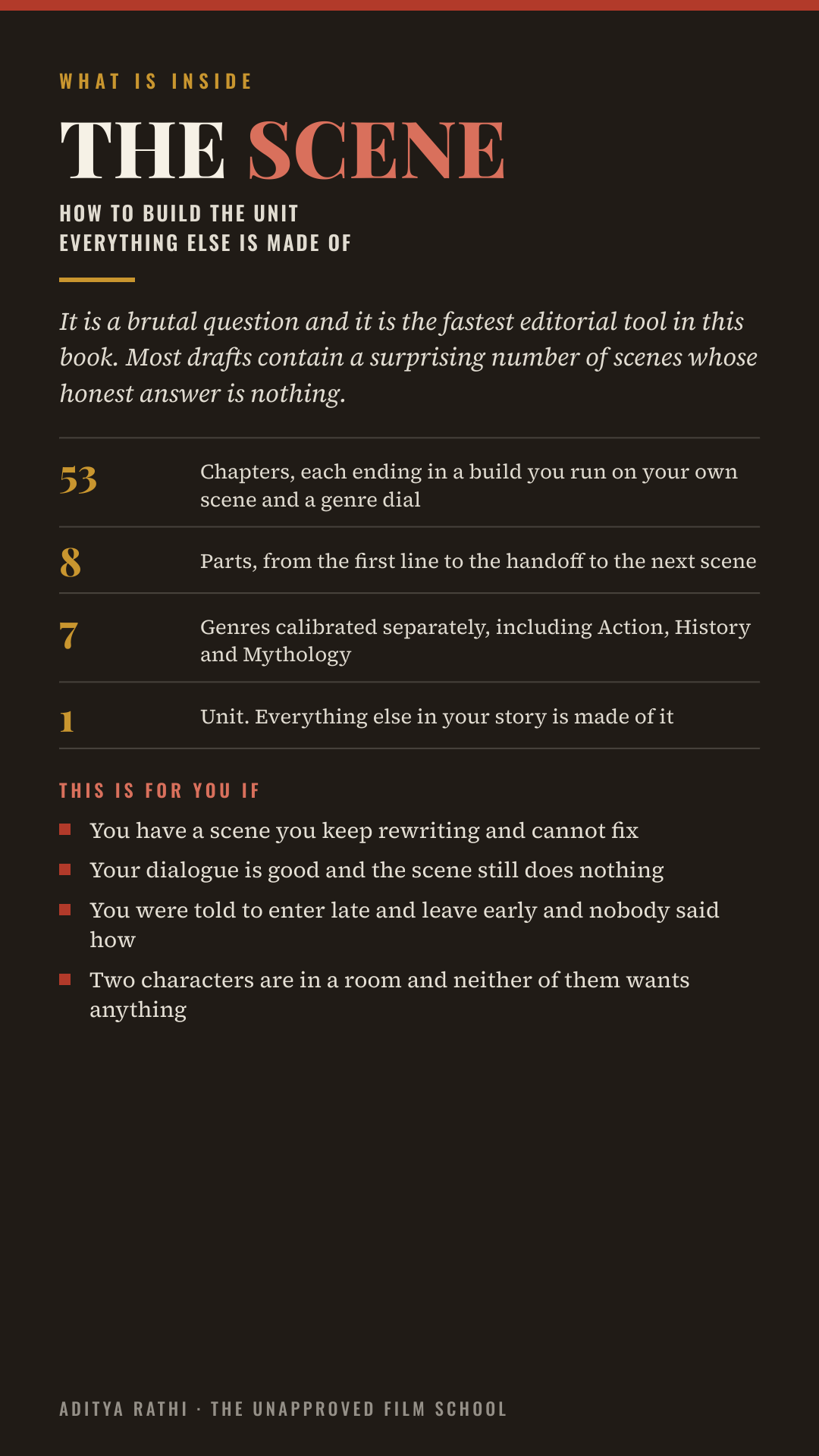
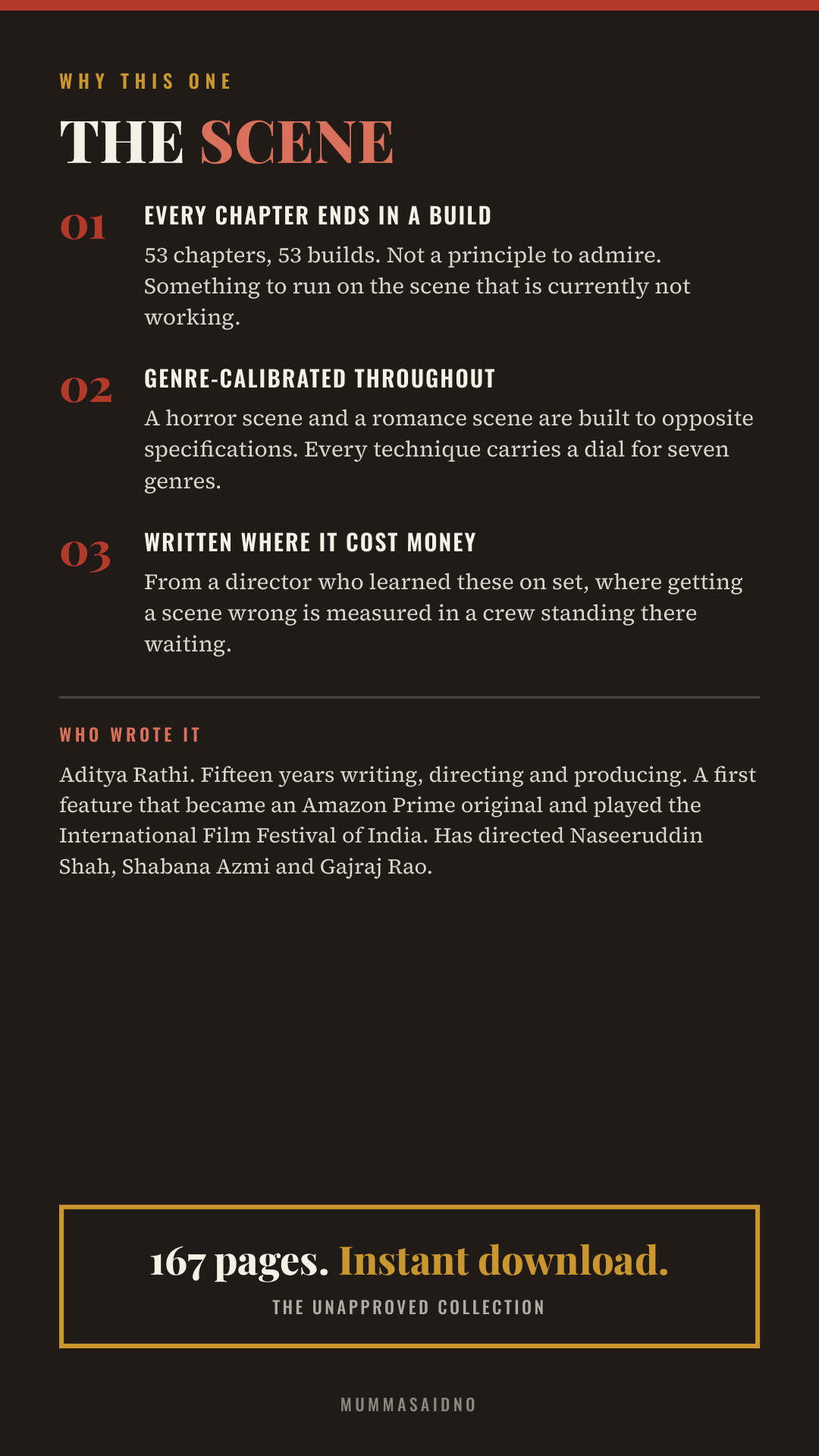
It is also built for every genre, and that is the part most craft books skip. The techniques are universal. The settings are not. Silence in horror is dread. Silence in romance is everything unsaid. Silence in comedy is the beat before the laugh. Silence in a mythological epic is the weight of a thing already decided by fate. So every chapter ends with a dial: how this technique changes across thriller and crime, horror, romance, comedy, literary, and action, history and mythology.
Inside
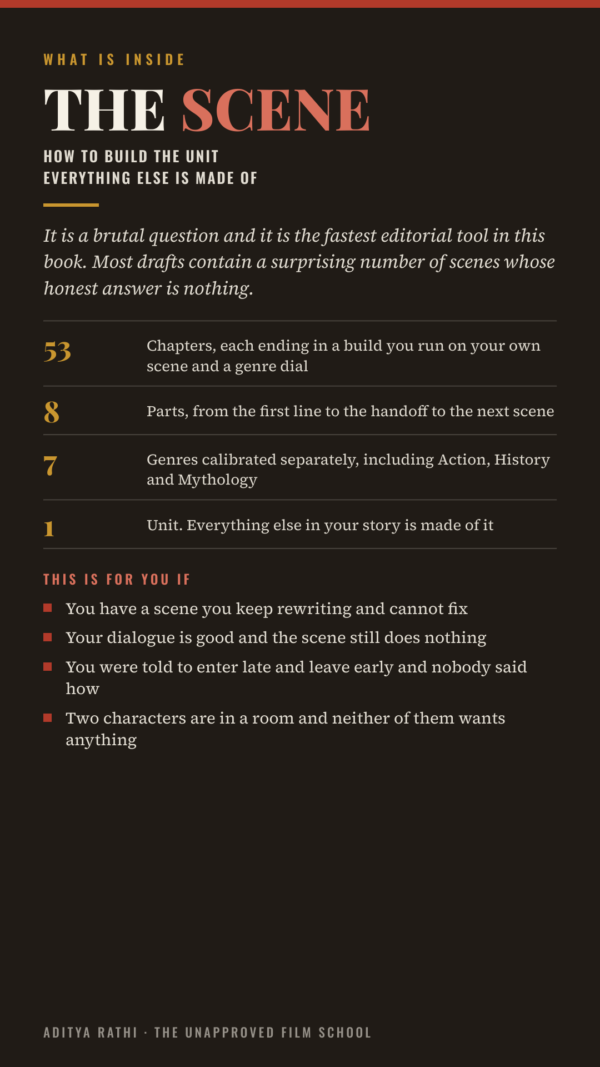
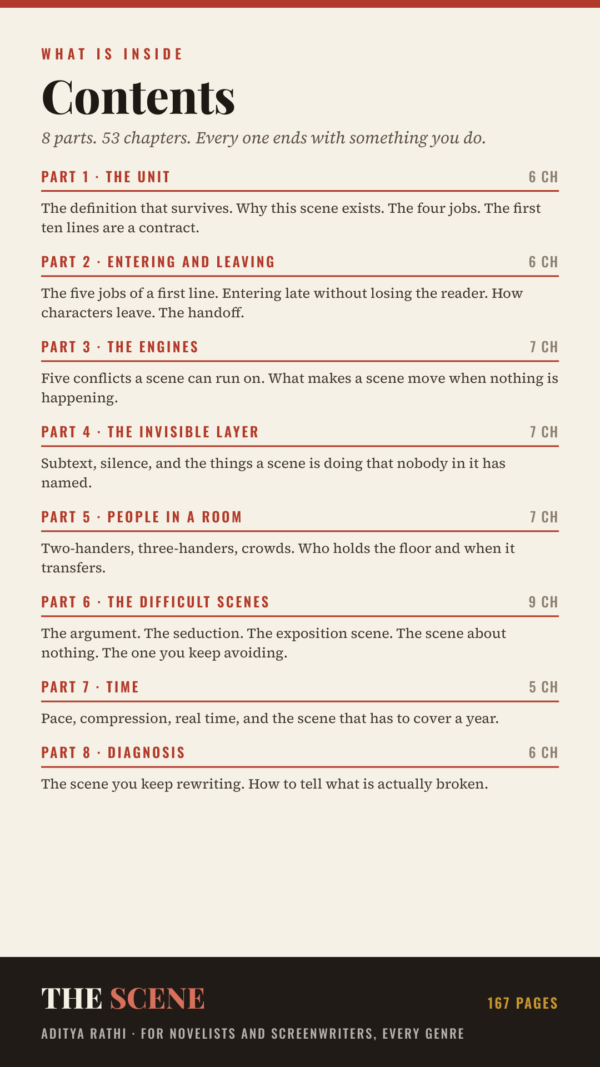
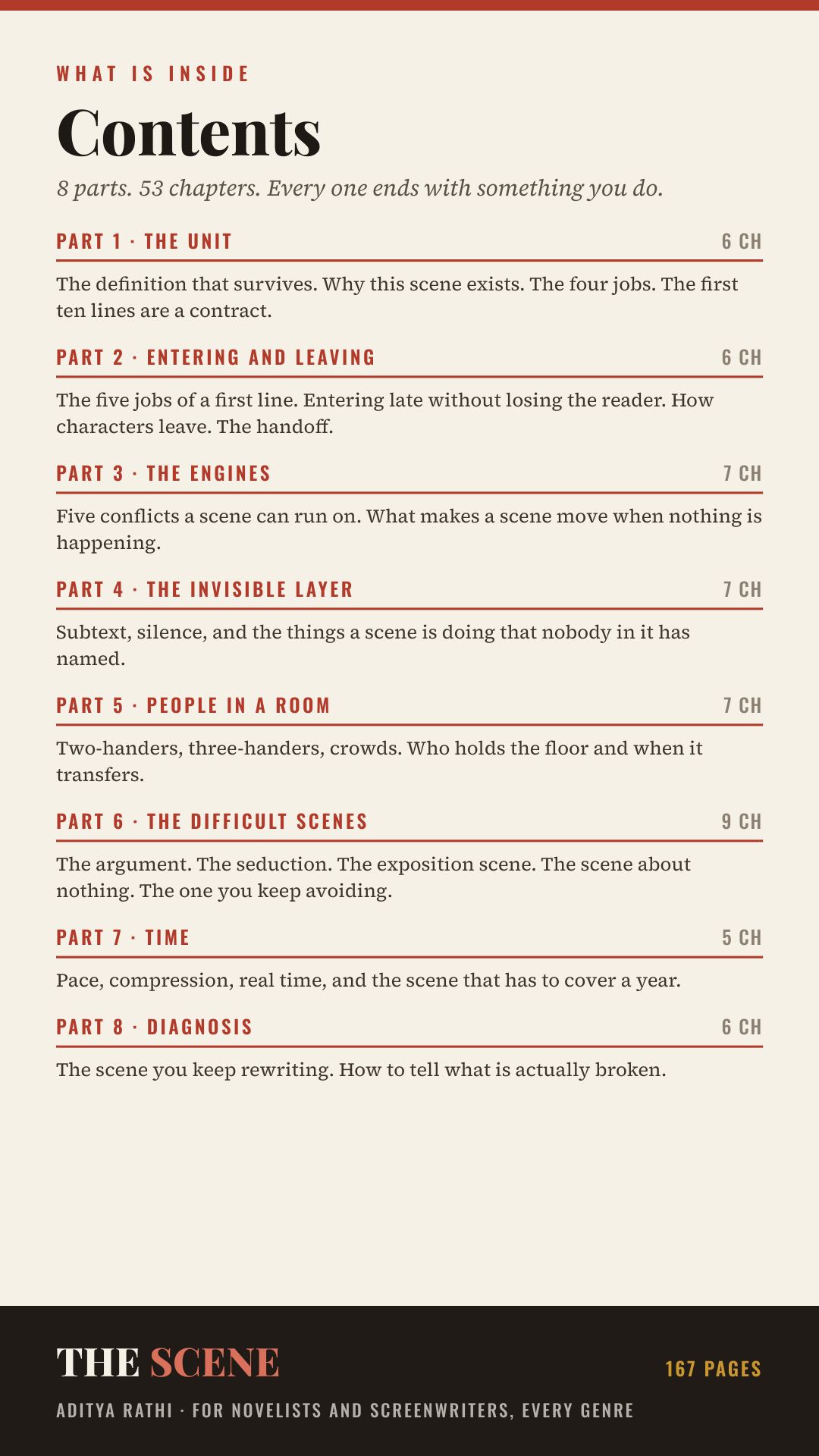
- The Unit. What a scene actually is, why this one exists, the four jobs, and the contract your first ten lines make.
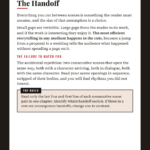
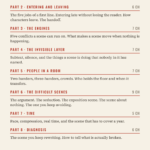
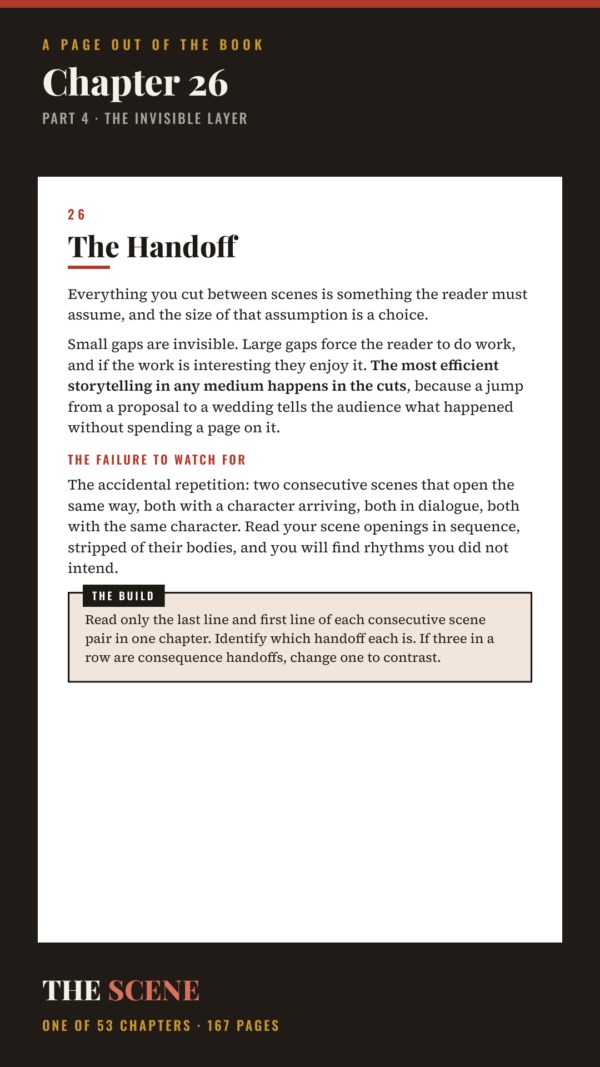
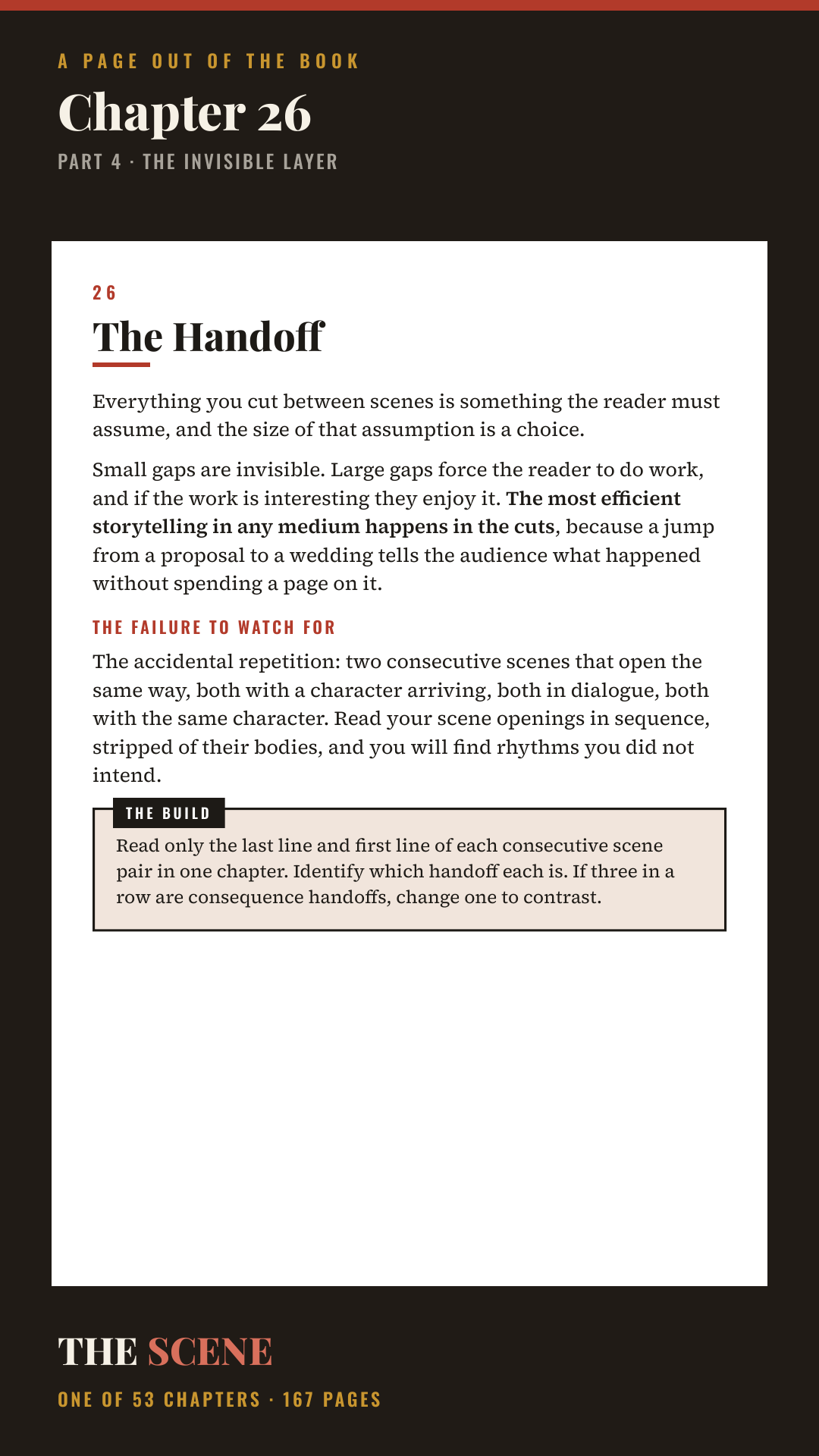
- Entering and Leaving. The five jobs of a first line, entering late without losing the reader, how characters exit, and the handoff between scenes.
- The Engines. Five conflicts, conflict that isn’t argument, how power moves in a room, the five tensions, and raising stakes without adding plot.
- The Invisible Layer. Six kinds of subtext, six types of silence, objects, location, and the scene that lies to the reader.
- People in a Room. Two-handers, the silent third, writing chemistry, the four stages of trust, and status.
- The Difficult Scenes. No dialogue, exposition, the reveal, flashbacks, intimacy, violence, death, the argument, the meal.
- Compressing without montage cliché, real time, the very long scene, the very short scene, inner time.
- The six causes, symptoms that aren’t what they look like, when to cut, when to merge, and the five passes in order.
53 chapters. 53 builds you can run today. One printable Scene Sheet for beside the draft.
Films are named throughout as illustration rather than as the spine, drawn wide across countries and decades.
Most of what writers call a structure problem is a problem inside a single scene. This book starts there and stays there.


Verified Buyer (Gumroad) –
There is a rare pleasure in finding a book that makes you see your own craft anew. The Scene is such a book. It offers not merely lessons, but little revelations. I found myself pausing, reflecting, and returning to my screenplay with a different eye. A fine companion for the writer, one that deserves a permanent place upon the desk.
Verified Buyer (Gumroad) –
The Scene is an amazing handbook for anyone working on screenplays. It has genuinely helped me look at my writing differently and brought in several new insights that I hadn’t considered before. I found it incredibly useful, practical, and insightful. It’s one of those books you keep coming back to, and I know I’ll be referring to it every time I work on a screenplay. Highly recommended!
Verified Buyer (Gumroad) –
Thank you so much for this valuable resource. I have read many craft books and I will be visiting this one over and over again.