



Every actor is eventually told to feel something on command, and nobody explains the machinery.
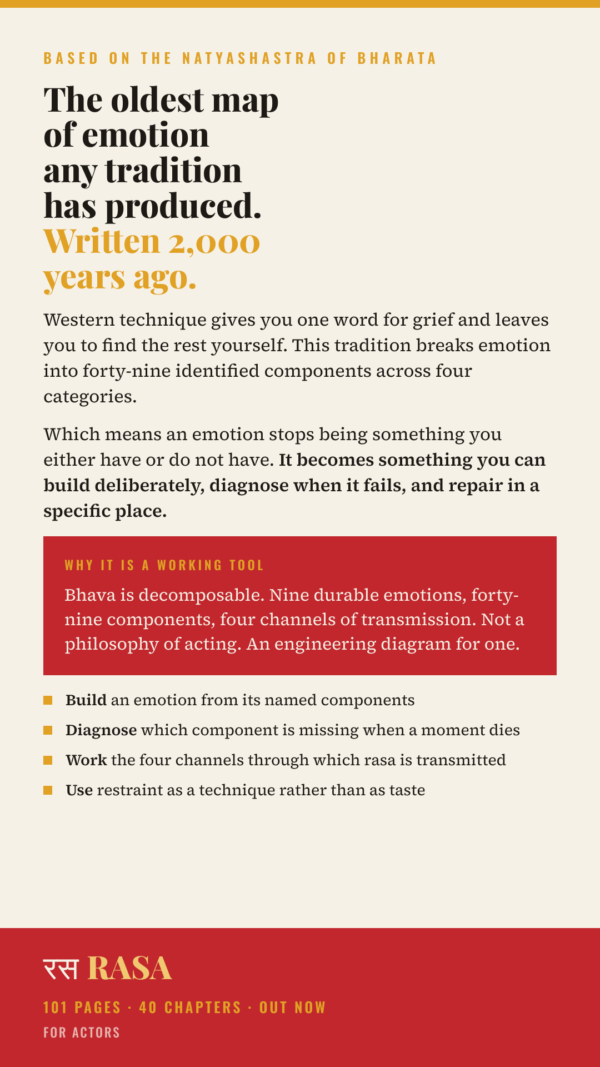
Western training solved this in the twentieth century by going inward: remember, imagine, respond. Roughly two thousand years earlier, someone in India took the same problem and solved it from the other end. Instead of asking what the performer feels, they asked what the audience tastes, and then built the machinery that produces it.
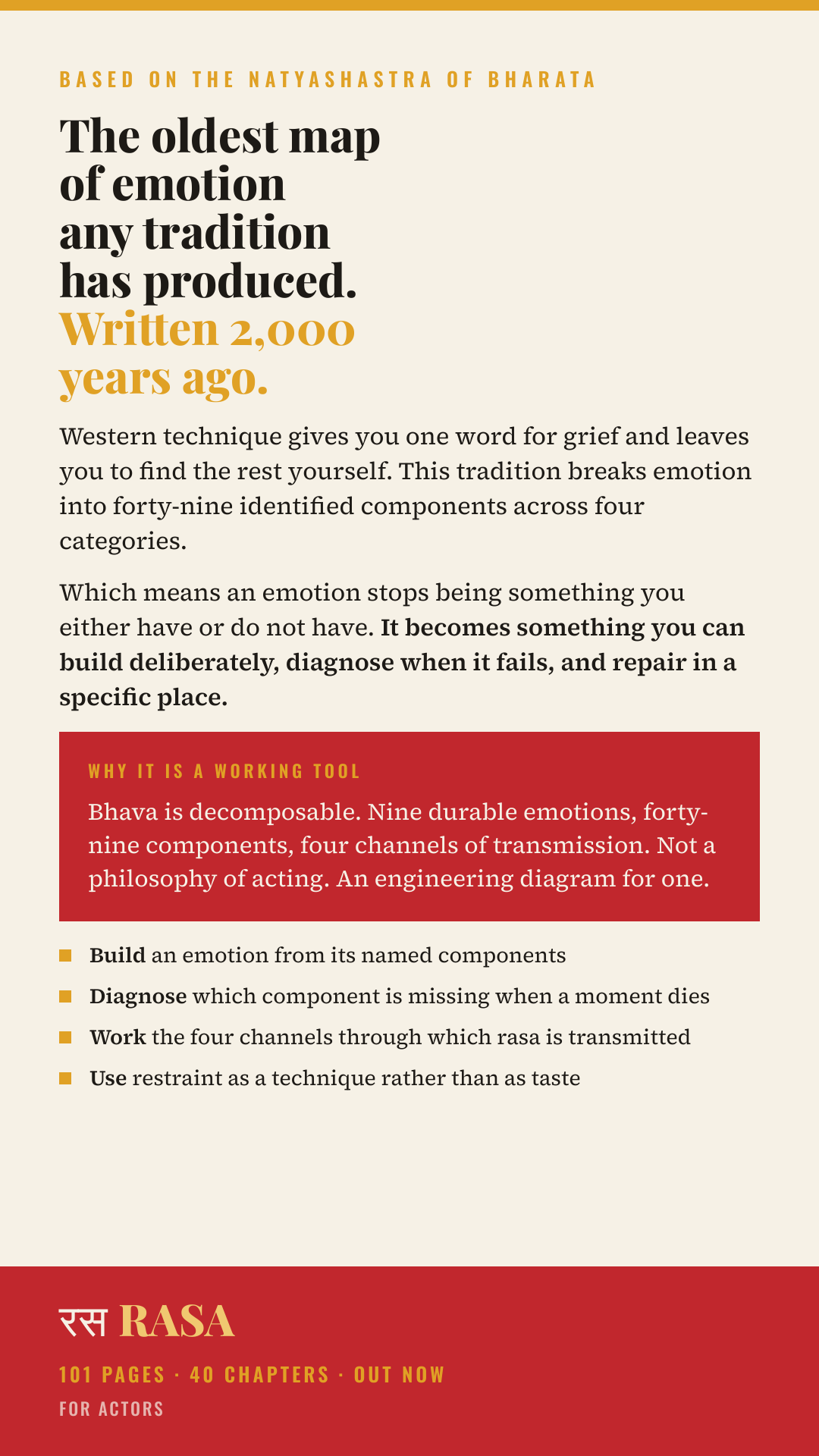
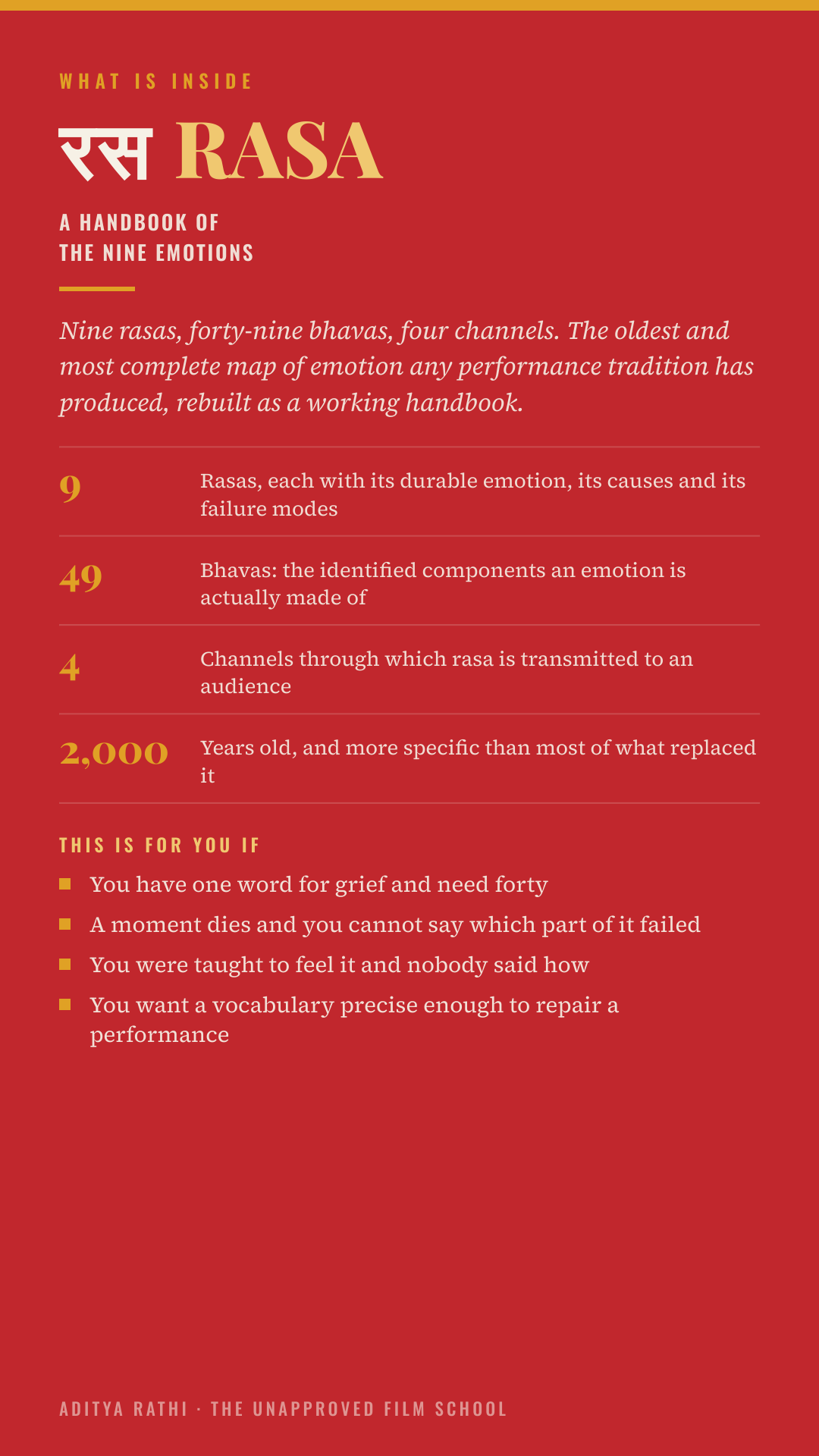
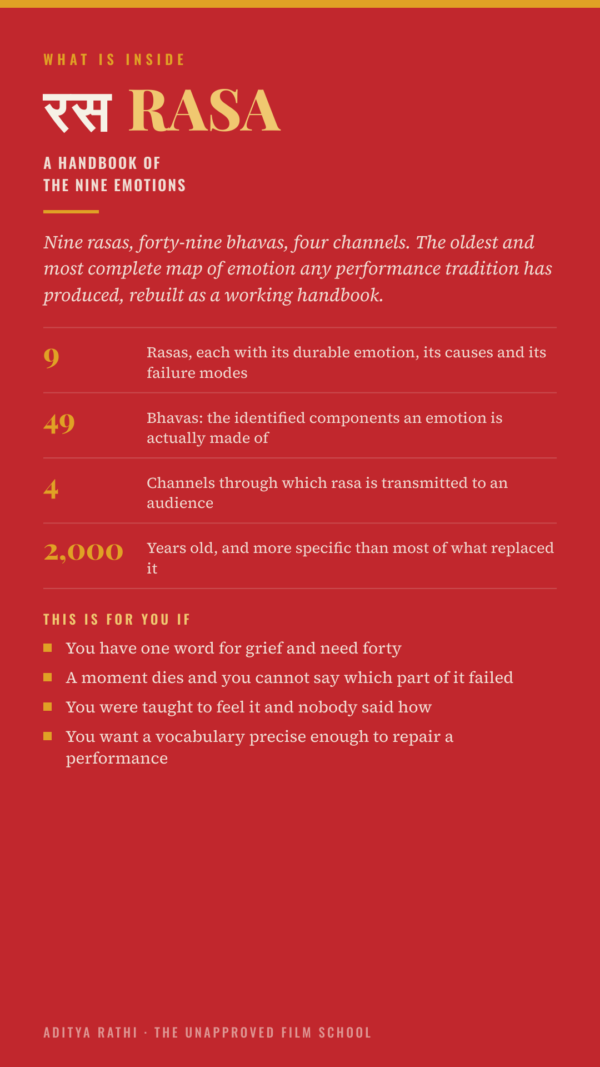
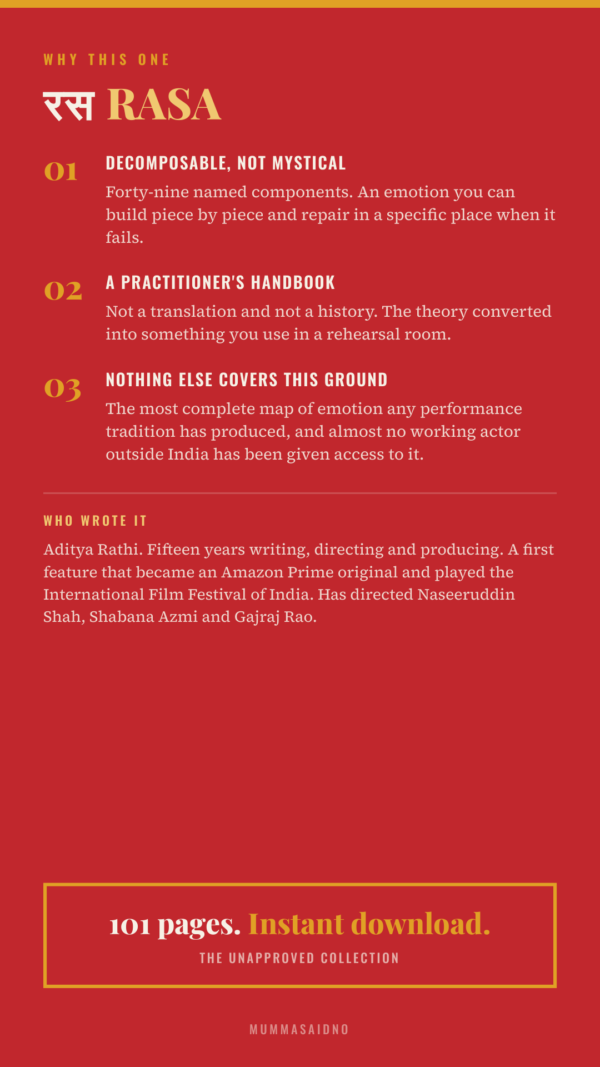
That system is rasa, set out in the Natyashastra, and it is the most complete map of human emotion any performance tradition has produced. Nine emotional registers. Forty-nine identified components. Four channels through which any of it reaches another human being. A precise account of how a stimulus becomes a state, how a state becomes visible, and how something visible in one body becomes something felt in a stranger’s.
Most people have heard the word. Almost nobody has been given the system. In India it is quoted at ceremonies and taught in dance classes and referenced in lectures, then everyone goes back to working by instinct. Outside India it sits in academic books, translated for scholars rather than built for practitioners.
This is the practitioner’s version.
Inside
- Part One: The System. How rasa actually works. Bhava and rasa, the rasa sutra, the permanent emotion, the causes, the visible consequences, the involuntary responses, and why a stranger feels anything at all.
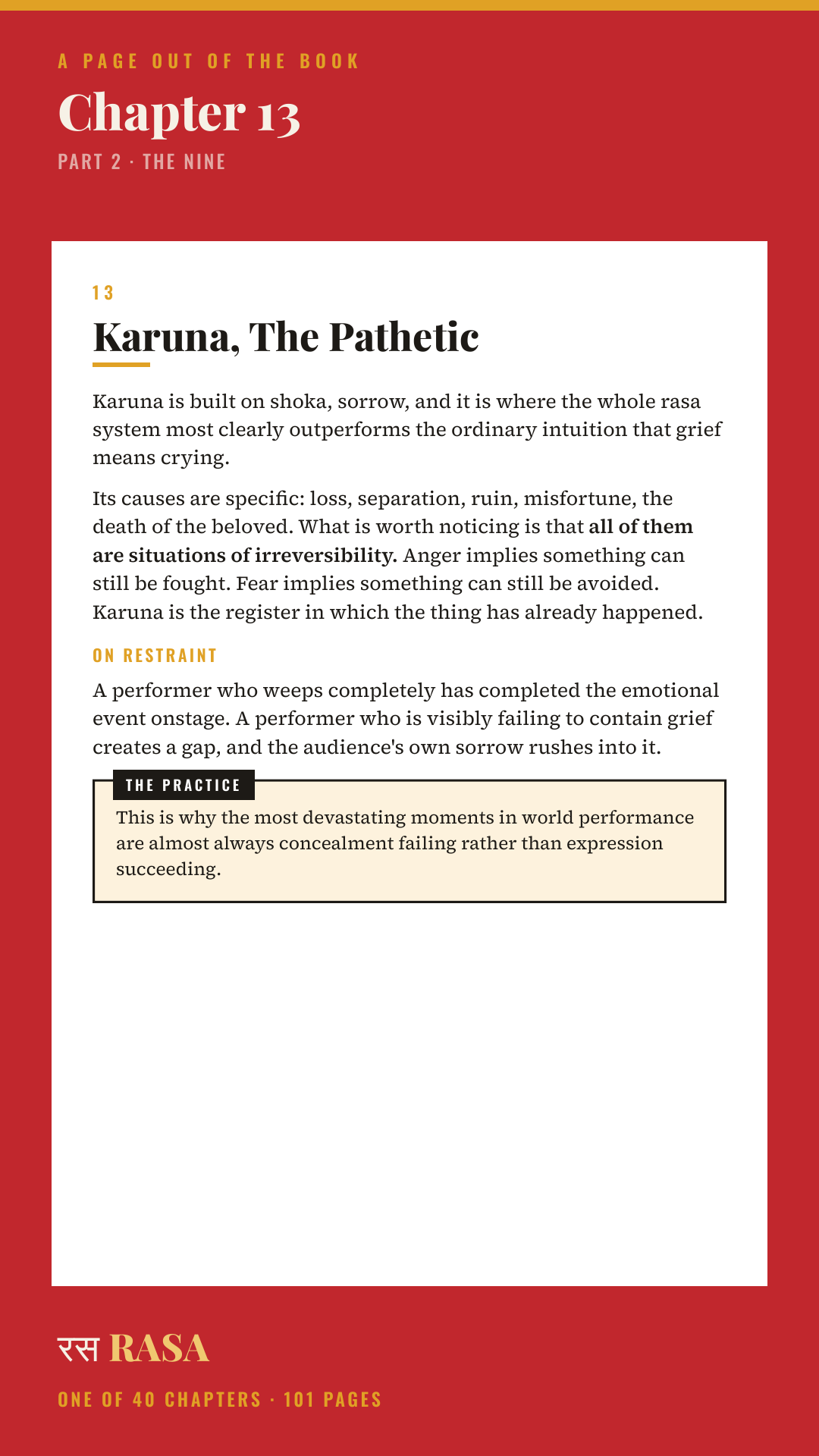
- Part Two: The Nine. One chapter per rasa, treated as an instrument rather than a mood. What causes it, what it looks like when it works, how it fails, and what it is most often confused with.
- Part Three: The Thirty-Three. The transient states, grouped into working families. This is the part that decides whether a performance holds attention or goes numb.
- Part Four: The Four Channels. Body, voice, external means, and the involuntary. How to find which one of yours is switched off.
- Part Five: The Practice. Your own emotional inventory, mapping a script, a character’s dominant register, working with other performers, and the flavour of a whole piece.
40 chapters. 40 practices you can do this week. One printable Rasa Sheet for your script bag.
Written for actors of any kind, and for the writers and directors who build what they perform. No camera required, no stage required, no Sanskrit required. Every term is transliterated and defined the first time it appears.
Not a translation. Not a history. Not a spiritual text. A technical system that happens to be ancient, presented so you can use it on Monday.
A practitioner’s handbook based on the theory of rasa set out in the Natyashastra, attributed to Bharata. Readers seeking the source itself should consult a full scholarly translation.